
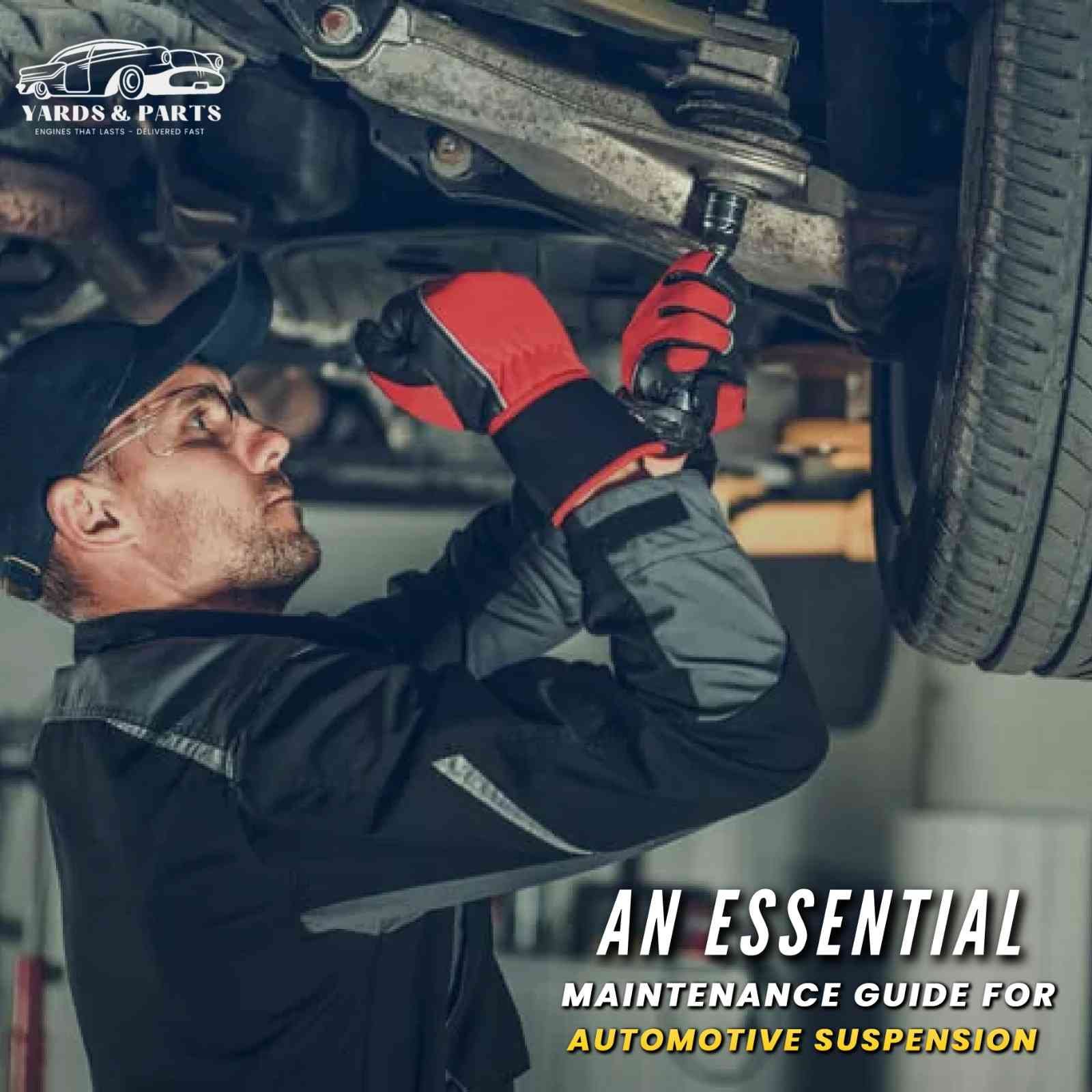
One of the most important but often ignored parts of car safety is Automotive suspension maintenance. It does a lot more than just make a bumpy road smooth. It keeps your tires in touch with the road, controls how quickly the steering responds, and absorbs the energy from bumps in the road so your car stays stable and predictable. When it doesn’t work, the effects can be anything from annoying to very dangerous.That’s what is very important to know how to maintain the car suspension so in this article you will get everything related to the suspension system repair guide.
One of the best things a car owner can do for their finances is to keep up with regular car suspension maintenance. Finding a worn bushing early on costs a lot less than fixing a control arm that has broken down. A car with a well-maintained suspension also sells for more money. Buyers and inspectors can tell.
It doesn’t matter if you like to do things yourself or rely on a trusted mechanic; it’s important to have good parts at fair prices. Yards and Parts USA has a huge selection of inspected and graded suspension parts, including shocks, struts, ball joints, and control arms. This makes it easier and cheaper to keep your suspension in great shape.
Understanding the Automotive Suspension System
The suspension system is the set of parts that links your car to its wheels. It lets the two move in relation to each other while keeping control and comfort. Every little bump in the road would go straight into the frame and into you without it.
The main parts are:
- Shocks (shock absorbers) stop the springs from bouncing back and forth. If you didn’t have them, your car would keep bouncing after hitting a bump.
- Struts are structural parts that combine the shock absorber and spring into one piece. Struts are used in the front suspension of many modern cars that drive on the front wheels.
- Springs, like coil or leaf springs, hold up the weight of the car and soak up the energy of the first impact. They work with shocks to keep the ride smooth.
- Control Arms are the parts that connect the wheel hub assembly to the frame of the car. They keep the wheels aligned while letting them move up and down.
- Ball joints are the points where the control arms and steering knuckles meet and move. They let the wheels turn and move up and down at the same time.
- Tie rods connect the steering rack to the wheels and send steering input. If your tie rods are worn out, you won’t be able to steer correctly.
- Bushings are rubber or polyurethane cushions that sit between the parts of the suspension. They soak up vibrations and let metal parts move around in a controlled way.
There are two main types of suspension: independent suspension, which lets each wheel move on its own (common on modern passenger cars for a smoother ride), and solid axle suspension, which connects both wheels on an axle (more common on trucks and off-road vehicles for strength). Knowing what kind of suspension your car has will help you find the right parts and how to take care of it.
Common Signs Your Suspension Needs Maintenance
- Your suspension tells you when something is wrong. The first step in taking care of your car’s suspension is to learn how to spot these signs early.
- A rough or bouncy ride means that your shocks or struts have probably lost their ability to dampen the ride and need to be replaced.
- Vibration in the steering wheel: If you feel vibration in the steering wheel while driving, it could be because the tie rods are worn out, the tires are out of balance, or the ball joints are failing.
- Cupping, feathering, or wear on one edge of a tire is a clear sign that your suspension isn’t keeping the wheel in the right position anymore.
- If your car pulls to one side without you steering it, it could be because the wheel is out of alignment, the control arm is worn out, or the tie rod is broken.
- Nose diving while braking: If the front of your car dips sharply while you brake hard, the front shocks or struts are probably worn out and not doing a good job of controlling weight transfer.
- Squeaking or clunking sounds: If you hear metallic clunks over bumps, it could mean that the ball joints, control arm bushings or sway bar links are loose or worn out. When rubber bushings are dry or worn out, they often squeak when they are under load.
If you have any of these symptoms, you should go over your suspension inspection checklist. If you see more than one symptom at a time, it’s time for maintenance.
Inspecting Shocks and Struts
The shocks and struts are the parts of your suspension system that do the most work. They control how quickly the springs compress and bounce back, which keeps your tires on the road. When they wear out, they become harder to handle and less safe. Drivers don’t usually notice this until the problem gets really bad because it happens so slowly.
List for Visual Inspection:
- Fluid Leaks: If you see oil or wet streaks on the shock or strut body, it means that fluid is leaking.
- Physical Damage: Check the housing for dents, bends, or other signs of damage.
- Mount Bushings: Look for cracks or other signs of wear on the top and bottom mount bushings. Look for rust, especially in places where road salt is used a lot.
- The Bounce Test: Push down hard on one corner of the car and let go. If the car bounces more than once or twice before it stops, the shocks or struts on that side are probably broken.
- Replacement Intervals: You should usually replace shocks and struts every 50,000 to 100,000 miles, but the way you drive is a big factor. Driving off-road a lot, hitting potholes, or carrying heavy loads will make things wear out much faster.
You have three choices when it comes to replacing shocks and struts:
- New OEM Parts: The most expensive choice, but they are sure to fit perfectly.
- Aftermarket Parts: The quality of these parts can vary, and they may not work as well as original parts.
Recycled OEM Parts come from trusted suppliers like Yards and Parts USA. Recycled OEM parts from cars with low mileage work just as well as new ones, but they cost a lot less—usually 50% to 70% less than new OEM parts.
Tire Wear and Suspension Relationship
The only part of your car that touches the road is the tires. Tires pay the price when the suspension isn’t working right, and one of the best signs that something is wrong with the mechanics is when the tires wear unevenly.
Cupping (scalloping) is when there are diagonal, uneven patches of wear around the tire’s edge. Most of the time, this happens because the shock absorbers are worn out and let the tire bounce against the road over and over.
Feathering is when tread blocks have one side that is rounded and the other side that is sharp. This usually happens because the toe is not aligned correctly, which can happen when tie rods or control arm bushings wear out.
Wear that is only on one side—Wear that is only on the inner or outer edge points to camber misalignment, which is often caused by broken control arms or strut mounts.
Every 5,000 to 7,500 miles, you should rotate your tires to keep your suspension and tires in good shape. Know the difference between alignment (changing the angles of the wheels), balancing (fixing the way the weight is spread out over the tire and wheel), and rotation (moving the tires from one place to another). All three services are different, but they all work together to make your tires and suspension parts last longer at the same time.
Wheel Alignment and Its Impact on Suspension
Wheel alignment is the exact angle at which your tires touch the ground. Even small differences from the specifications can speed up tyre wear and put extra stress on suspension parts.
Camber (the angle of the wheel when viewed from the front), caster (the angle of the steering axis when viewed from the side), and toe (whether the fronts of the tires point inward or outward when viewed from above) are the three most important alignment angles.
When the car pulls to one side, the tires wear unevenly, and the steering wheel isn’t centred when driving straight, these are all signs of misalignment. You should check your alignment every year or after a big hit, like hitting a big pothole, a curb or being in a minor accident.
Correct alignment affects fuel economy in addition to safety. When wheels are not aligned properly, they create rolling resistance, which makes the engine work harder and use more fuel. One of the easiest ways to help your car run more efficiently is to keep its alignment right.
Suspension Bushings: Small Parts, Big Impact
Bushings are small parts of your suspension, but when they break, they can make a big difference. You put these round cushions at the ends of control arms, sway bars, and strut mounts. They soak up vibration and let metal parts move in a controlled way.
Most cars come with rubber bushings already installed. They do a good job of absorbing vibrations, but over time, heat, oil, and UV damage make them less effective. Polyurethane bushings are stiffer, last longer, and are popular for both performance and off-road use. They might, however, let in a little more noise from the road.
When bushings wear out, you might hear clunking or knocking noises over bumps, feel like the steering isn’t quite right, feel more vibration in the cabin, or see cracks or tears when you look at them.
The main reason to change bushings early is that if you don’t, metal will touch metal at suspension joints, which speeds up the wear on control arms, ball joints, and other expensive parts. If you replace a $30 bushing on time, you won’t have to replace a $400 control arm later.
Ball Joints and Tie Rod Maintenance
Tie rods and ball joints are the parts that connect your steering input to your wheels directly. They work all the time, and if they break, it could be very dangerous.
Ball joints let the wheel hub move in more than one direction at the same time. Wear can cause the steering to feel loose, make clunking noises when you turn, cause tires to wear unevenly, and in very bad cases, make the steering feel like it’s moving around or isn’t stable. If a ball joint breaks, the wheel can come off the car completely. This is why checking ball joints and tie rods inspection is so important for safety.
Tie rods move the sideways force from the steering rack to the wheel. When the inner or outer tie rod ends wear out, the steering becomes loose and inaccurate, which is especially noticeable when changing direction at highway speeds.
Check both of them during every major service. Every 70,000 to 100,000 miles, or sooner if play is found during inspection, replace the tie rod ends and ball joints. As soon as you know that something is worn out, don’t wait to replace it.
Keeping Suspension Components Clean and Rust-Free
Mud, moisture, and road salt slowly kill suspension hardware. When you live in a cold climate, corrosion on control arms, ball joint housings, and spring perches can weaken the structure long before the mileage would normally be a problem.
During the winter, wash the underside of your car often, paying special attention to the points where the suspension is attached. After the winter, think about giving your undercarriage a full wash and checkup. Spray exposed metal surfaces on the control arms and subframe parts with a rust-inhibiting spray. Cleaning parts not only makes them last longer, but it also makes it much easier to inspect them in the future because you can see what you’re looking at.
Suspension Fluid Leaks and How to Detect Them
Hydraulic devices include shocks and struts. They depend on pressurised oil moving through internal valves to stop the springs from bouncing. The oil leaks out when the seals wear out, and the damping performance drops quickly.
If you see an oily residue or a dark, wet streak running down the body of the shock or strut, that’s a sign that it’s broken. New leaks may have a thin layer of oil on them, while older leaks may have dirt from the road on them, which makes them look like dark, greasy buildup. If you can see any fluid on the body of a shock or strut, it means that the unit needs to be replaced. Don’t wait—if your shock is leaking, it makes your car much less stable when you have to make quick turns.
Driving Habits That Protect Your Suspension
The way you drive is just as important as the parts you use for the suspension. Every part of the system can last much longer if you follow a few simple rules.
Slow down for potholes and speed bumps. Even at low speeds, a sharp impact sends a lot of force into ball joints, control arms, and spring perches. Don’t brake or turn sharply; instead, do it smoothly. Don’t overload your vehicle beyond its rated capacity, and if you’re towing, be careful of tongue weight. Too much load compresses springs beyond their intended range and speeds up shock wear.
Preventive Maintenance Schedule for Suspension Systems
A regular schedule for checking the suspension stops small problems from turning into big ones. As a general rule, you should visually check your shocks, struts and bushings every 12 months or 15,000 miles. You should also check your wheel alignment every 12 months or after any major road impact. You should rotate your tires every 5,000 to 7,500 miles. You should have your ball joints and tie rods professionally checked every 30,000 miles. You should also plan to replace your shocks and struts replacement between 50,000 and 100,000 miles, depending on how you drive.
At every major service interval, your mechanic should check the entire underbody. It’s always cheaper to catch wear early than to wait for it to fail.
Cost of Suspension Repairs vs Preventive Maintenance
A regular schedule for checking the suspension stops small problems from turning into big ones. As a general rule, you should visually check your shocks, struts and bushings every 12 months or 15,000 miles. You should also check your wheel alignment every 12 months or after any major road impact. You should rotate your tires every 5,000 to 7,500 miles. You should have your ball joints and tie rods professionally checked every 30,000 miles. You should also plan to replace your shocks and struts between 50,000 and 100,000 miles, depending on how you drive.
At every major service interval, your mechanic should check the entire underbody. It’s always cheaper to catch wear early than to wait for it to fail.
Choosing Quality Suspension Parts — Yards and Parts USA
Not all suspension parts are the same, and where you get them is just as important as when you replace them.
OEM parts are the most expensive option, but they are guaranteed to fit and work like they should. Aftermarket parts come in a wide range of quality; some are as good as OEM parts, while others are not. Recycled OEM parts from a certified supplier are the best deal because they are genuine parts from the manufacturer at a much lower price than new ones.
Yards and Parts USA is an expert at finding, checking, and grading used suspension parts from cars that have been salvaged all over the United States. Before being listed, each part is checked to make sure it is in good shape. You can return or get a warranty on major parts, so you’ll never be stuck with a bad purchase.
Yards and Parts USA has one of the biggest inventories in the country, so you can get shocks, struts, control arms, ball joints, or tie rods for your car, whether it’s American or foreign. They also ship to your door or shop anywhere in the country.
Conclusion — Maintain It Now, Thank Yourself Later
Every mile you drive, your suspension system works hard. It’s not just about comfort to keep it in good shape; it’s also about safety, tyre life, fuel economy, and keeping the value of your car over time. The three most important parts of good automotive suspension maintenance are regular inspections, timely part replacements, and smart sourcing.
Don’t wait for a noise, a pull, or an inspection that doesn’t pass to do something. Check out Yards and Parts USA today for suspension parts that have been quality-checked and are available at low prices. This will keep your car safe for miles to come.